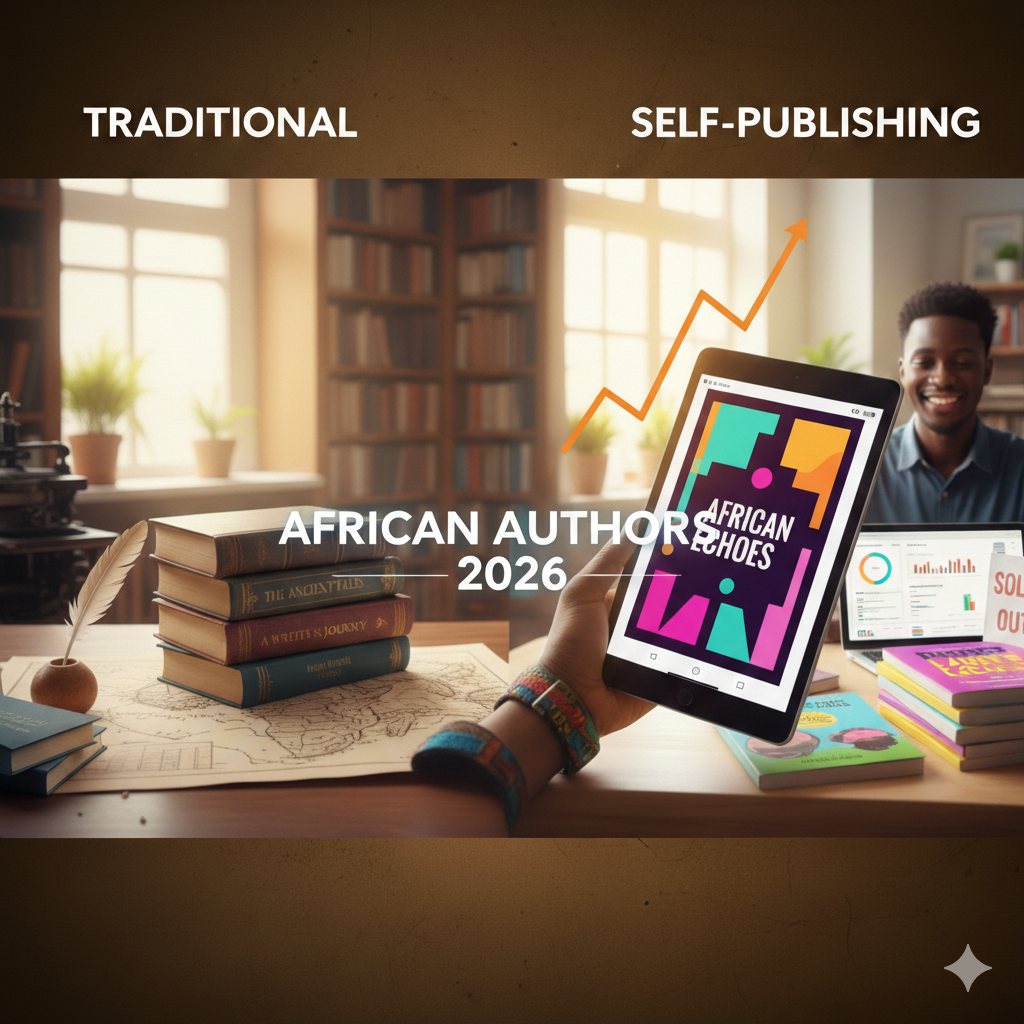
Traditional vs Self-Publishing: The Brutal Truth for African Writers in 2026
You finally finished that manuscript. After months of staring at a screen and wondering if your plot actually makes sense, the story is done. You are probably exhausted but also a little bit terrified. Now comes the part that actually determines if people will read your words or if they will just sit in a folder on your laptop for the next five years.
Ten years ago, the path was simple: find an agent or a publisher and wait. If they said no, your book died. But it’s 2026 now. The African literary scene is wide open. Between the rise of local powerhouses like Masobe and the ease of selling directly to your audience on Selar, the “old way” is just one option on the table.
Here is the honest breakdown of what it looks like to publish on the continent today.
The Traditional Path: The Badge of Honor
If you want to see your book on the front table at Rovingheights or get longlisted for a major prize, the traditional route is still the goal. In Nigeria, getting signed by a house like Ouida, Cassava Republic, or Narrative Landscape is more than just a contract; it is a validation of your craft.
The Perks of Having a Team
The biggest win here is that you do not pay a kobo to get your book out. A real publisher takes the financial risk. They hire the professional editor who will tell you that your middle chapters are a mess. They hire the designer who makes sure your cover does not look like a 2010 Facebook banner.
Most importantly, they handle the logistics. If you’ve ever tried to ship a box of books across a border, you know it’s a nightmare of customs fees and “lost” packages. Traditional publishers have the trucks, the warehouses, and the established networks to get your physical copies into stores like Vidya’s Bookstore in Accra or Text Book Centre in Nairobi. You focus on the writing while they focus on the heavy lifting.
The Real Cost of the “Dream”
But let’s talk about the downside. Traditional publishing is slow. We are talking two years from the day you sign the contract to the day you see the book in a store. If you are a writer who wants to put out three books a year, this timeline will kill your momentum.
Then there is the money. You might get an advance, but after that, you are usually only making about 10% to 15% on every copy sold. If the publisher decides your book is not their top priority this month, it might just disappear into the background while they focus on their “star” authors.
Self-Publishing: The Entrepreneurial Hustle
Self-publishing used to be for the writers who could not get a “real” deal. That idea is dead. Today, some of the most successful African authors are going indie from the start because they want to run their writing like a business.
Keeping the Money and the Keys
The biggest perk is the profit. Instead of a tiny royalty, you are looking at keeping up to 70% of your sales. Platforms like Amazon KDP and local options like Selar have made it easy to reach a global audience. You do not have to wait for anyone’s permission. You pick the title. You pick the release date. You own every bit of the data from the people who buy your book.
If you have ideas for poetry, thrillers, and non-fiction all at once, this freedom is a lifesaver. You do not have to wait for a committee to tell you if your idea is “marketable.”
The Hard Part of Going Solo
The “self” in self-publishing is literal. You are the CEO now. You have to save up and pay for a professional editor and a cover designer out of your own pocket. In 2026, a professional edit for a 50,000-word book in Nigeria can cost anywhere from ₦150,000 to ₦250,000, and a high-quality cover adds another ₦40,000 to ₦70,000.
If you do not have a marketing plan, your book will just stay at the bottom of a search result with zero views. It requires a specific kind of grit. You have to be a project manager and a marketer just as much as a writer.
The 2026 Context: Logistics and Getting Paid
We have to talk about the technical side of being an African writer right now.
First, let’s talk about the money. For a long time, getting paid by international platforms was a headache. Now, tools like Grey or Raenest have made it much easier to receive royalties in USD and convert them to your local currency without waiting months for a wire transfer.
Second, the “Direct-to-Reader” trend is huge. Many African writers are skipping the big platforms and selling ebooks directly through their own websites or social media. This allows you to build a community and keep almost 100% of the profit. It also bypasses the shipping issues that make physical books so expensive to move between countries.
How to Decide Which Path is Yours
The choice depends on what you value more right now.
- Go traditional if: You want the prestige, the physical bookstore presence, and the chance to win literary awards. Be ready to be patient and lose a lot of control over the process.
- Go self-published if: You want the money, the speed, and the ability to own your brand. But only do it if you are willing to work as hard on the marketing as you did on the actual manuscript.
Let’s Get Your Book Out of Your Drafts
Deciding how to publish is hard enough without worrying if your manuscript is actually ready for people to see. If you’re at the point where you need a second pair of eyes, we can help with that.
At SunriseWithEnoh, we keep things simple. We can handle your editing and proofreading so the story flows better, or sort out your book cover and voiceovers if you’re going digital. If you’re still not sure which publishing route is the right fit for your specific book, we can just sit down and talk through it with you.